How to Save Money on Gas
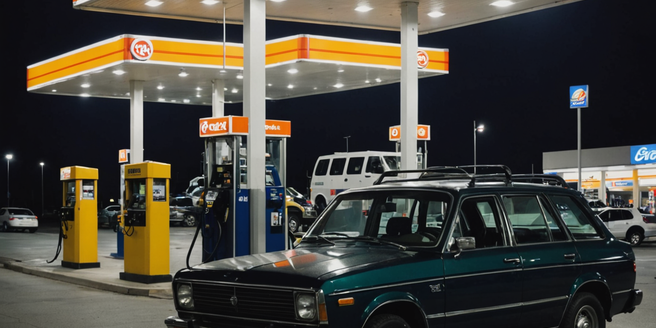
Gas has gotten a lot more expensive this year. According to the U.S. Energy Information Administration, the national average for regular was $4.33 a gallon in mid-October 2026, about $1.27 more than the same week a year ago. For a lot of households, that’s a noticeable hit every time they fill up.
You can’t control the price on the sign. You can control how much gas you use and how much you pay per gallon, and both add up quickly.
Why Small Changes Matter
An illustration, not a prediction: a car that gets 25 miles per gallon and is driven 12,000 miles a year uses about 480 gallons. At $4.33 a gallon, that’s roughly $2,080 a year. Improve your mileage by 10%, through any mix of the tips below, and you’d save about $200 without changing where you go.
The point is that small percentages on a big annual number turn into real money.
Change How You Drive
This is the biggest lever, and it costs nothing. The figures below come from the Department of Energy and EPA’s fueleconomy.gov.
- Drive smoothly. Speeding, hard acceleration, and hard braking can lower gas mileage by roughly 15% to 30% at highway speeds and 10% to 40% in stop-and-go traffic. Accelerate gently and coast toward red lights.
- Slow down on the highway. Fuel economy drops quickly above 50 mph. Driving 5 to 10 mph slower saves an average of 7% to 14% on fuel.
- Use cruise control on the highway. Holding a steady speed usually saves gas.
- Don’t idle. An idling engine burns a quarter to a half gallon of fuel per hour. If you’ll be parked longer than about a minute, turning the engine off saves money. Restarting uses only about 10 seconds’ worth of fuel.
- Combine errands. A warm engine is more efficient than a cold one, so one loop with several stops uses less gas than several separate trips.
Lighten the Load
- Take off the roof box when you’re not using it. A large rooftop cargo box can cut fuel economy by about 10% to 25% at interstate speeds. A rear-mounted carrier has a much smaller effect.
- Clear out the trunk. An extra 100 pounds can lower mileage by about 1%. That matters most in smaller cars.
Keep Your Car in Shape
Basic maintenance keeps you from losing mileage you already have. Per fueleconomy.gov’s maintenance guide:
- Check your tire pressure monthly. Mileage drops about 0.2% for every 1 psi your tires are under-inflated, on average across all four tires. The correct pressure is on a sticker inside the driver’s door, not the number on the tire itself. Properly inflated tires also wear longer and handle better.
- Use the recommended motor oil. The grade the manufacturer recommends can improve mileage by 1% to 2% compared with the wrong one.
- Don’t ignore the check engine light. It can signal a problem that hurts fuel economy, along with bigger repair bills if left alone.
Buy the Right Fuel
- Use the grade your owner’s manual calls for. If your car is designed for regular, premium does nothing for it. AAA’s testing found no gain in horsepower, fuel economy, or emissions from using premium in cars that require regular. AAA estimated drivers waste more than $2.1 billion a year doing it. Premium means higher octane, not higher quality.
- If the manual says premium is required, use it. If it says premium is only “recommended,” regular is usually acceptable. Check the manual to be sure.
Pay Less Per Gallon
- Compare prices before you fill up. Prices can vary a lot between stations a few miles apart. Apps like GasBuddy show current prices near you.
- Watch for cash prices. Some stations charge more per gallon for credit cards. Look at the sign before you pump.
- Use rewards you already have. Many grocery store loyalty programs offer fuel discounts based on your grocery spending. Warehouse clubs often have cheaper gas for members, but only count that if you already have a membership.
- Try a cash-back app. Apps like Upside give cash back at participating stations. Check whether the station is cheap to begin with, because cash back on an expensive gallon may still cost more than a cheaper station nearby.
- Gas rewards credit cards can help, but only if you pay the balance in full every month. Interest charges cancel the rewards.
Drive Less When You Can
The cheapest gallon is the one you don’t buy.
- Carpool to work or school, even a couple of days a week.
- Try public transit for regular trips if it’s practical where you live.
- Walk or bike short trips. Short trips are also where cars are least efficient, because the engine never fully warms up.
- Ask about working from home one or more days a week, if your job allows it.
Skip the “Gas-Saving” Gadgets
Ads for fuel-line magnets, plug-in “fuel savers,” and miracle additives tend to spike whenever gas prices rise. The FTC has warned consumers about these products. When the EPA tested devices like these, very few provided any benefit, and some caused engine damage or increased emissions. The tips above save more, and they’re free.
Thinking About Your Next Car?
If you’re shopping for a vehicle, fuel economy is one of the costs that lasts as long as you own it. The government’s fueleconomy.gov lets you compare models side by side and estimate the yearly fuel cost of each.
Helpful Resources
- EIA: Gasoline and Diesel Fuel Update: weekly national and regional gas prices
- fueleconomy.gov: Driving more efficiently: the official figures behind the driving tips
- fueleconomy.gov: Keeping your vehicle in shape: maintenance that affects mileage
- AAA: Premium fuel study: why premium doesn’t help cars built for regular
- GasBuddy: compare station prices near you
Final Thoughts
Gas prices will keep moving, and none of these tips will make a $4 gallon feel cheap. But driving more smoothly, keeping your tires inflated, skipping premium your car doesn’t need, and checking prices before you pull in can add up to real savings over a year. Start with the free ones: how you drive, and what’s in your trunk and on your roof.